Showing posts with label books. Show all posts

Monday, 9 July 2018

Sun, Crime and Podcasts

 
The weather is still hot and dry. 
Unbelievable for misty old Cornwall. 
We hide in the granity darkness of our sitting room. Walks have to be taken before 9 in the morning or after 7 in the evening. I was watering the vegetables in the garden the other evening  and looking up at our cherry tree saw that, to my horror, even this tall tree's leaves were wilting. Alors! What will survive this dry, hot spell.

I have another review posted on the Euro Crime site. This time it is a crime novel by Greek writer Pol Koutsakis. "Baby Blue" is the second in his series featuring self-styled "caretaker" Stratos Gazis. Greatly inspired by the American Noir films that Gazis quotes by heart, this one involves a hunt for the killer of a journalist and is set in contemporary Athens. Head to the review to find out more.

Meanwhile I am still hooked on listening to fictionalised podcasts.  Still following "Tanis" (see the "Tanis Post") I have also subscribed to PRA's "The Black Tapes" which actually preceded "Tanis" and ran for three series from 2015 to 2017. 


It's another drama played as investigative journalism. "Alex Reagan" (voiced by Lori Henry) and her producer research demons, ghosts and the work and life of the supremely sceptical Dr Richard Strand. Will the podcast return for another series? Is there a rumour out there? Whatever happens, the beauty of podcasts is that you can still listen in as they bob about in the podcast interspace!

Meanwhile The Old Man uses Wimbledon as an excuse for sitting in the dark watching telly all day.

Tuesday, 26 June 2018

Mid Summer - And More Criminal Reading

It's hot. Dry. The other day a bee swarm flew through the garden looking for a new home .. chasing that queen.

In fact it is too hot for The Old Man in his current state. At least, this is what he says, as he sits indoors in the dark watching tennis on telly and occasionally making it out to the frosty air of a local, air-conditioned supermarket.
But actually I believe him.

And then there's all that waking up at 4 in the morning... tossing and turning. Not long after that... the dawn chorus starts and it grows light. Though I don't really mind. There is a blackbird whose distinctive song I seem to have heard for years. Is birdsong hereditary? No. I don't really think so. It must be an old bird ... just like I.

So ... all of this contemplation of time passing and the aging process has made me a little reluctant to post recently. Alors! Also - so much makes me angry these days. Brrrr! Whaaa! What to do with it.

I have another book review up - over on the Euro Crime blog. This is for "The Memory of Evil" third in Roberto Costantini's weighty Italian-Libyan trilogy of "Evil" built around Commissario Michele Balistreri of the Rome Murder Squad - from his childhood and youth in pre-Gaddafi Libya through to  his police career in Rome and on up to 2011 and the fall of Gaddafi, and his search for resolution of his own past and that of his blood-brother gang in 1960s Libya. The trilogy is impressive and not for the faint-hearted on many counts. For further detail - pop over to Euro Crime via the above link and read the detail.

Meanwhile... I'm off to drink some more water and contemplate a slice of watermelon for lunch.

Wednesday, 16 May 2018

Criminal Activities: Reading & Watching

My latest review on Euro Crime is for James Wolff's first novel "Beside The Syrian Sea". It's set in the Middle East and involves a son's attempts to get his father, an ISIS hostage, released from captivity. The father is an earnestly moral cleric and the son is a desperately introverted intelligence worker finding himself suddenly without the boundaries he has so carefully maintained and quite literally in a new land.
I was gripped by it, not just by plot and thrill but by  its characters and their relationships. I also somehow found it "terribly British" ... in the nicest possible way. Read the review in full detail here at Euro Crime.

Meanwhile, as they say, there has been much to watch on telly. I haven't really enjoyed Season 2 of the Belgian thriller "Salamander" but I still watched it through. Nor, I must say, am I enamoured of Belgian thriller "Rough Justice" either. But still watching. Perhaps my dissatisfaction lies in the completely straight-faced, lugubrious main characters of each series? My Belgian favourite? (Sounds like a variety of iris, don't it.) When it comes to Belgian thrillers on British screens over the last 12 months - my highlight remains Season One of "Professor T". Not at all to everybody's taste, (sigh) it was to mine. The Old Man gave up on its fantasy musical breaks and opted for the washing up, but I was hooked. Although ... I realise now ... it carries the motif of straight-faced Belgian leads to bizarre extremes with its emotionally locked-in, germ-obsessive, forensic genius that is Prof T. Yes I know there have been other series predicated on emotionally damaged, clever-clogs analysts - but they don't have fantasy musical numbers! End of.

Aah! Not Belgian I know - but I forgot  season Four of "The Bridge". Now there's another "straight-faced" lead  - but no fantasy musical numbers - yet.
Am I watching? Of course I am.

Sunday, 6 May 2018

Time Flies: The Doll Catches Up


What a difference a month makes. And where have I been? Not on a luxury cruise. Not in a remote corner of the Far East. I have been at home. Not sleeping, staring at the rain and feeling anxious.
But now (ta-da fanfare) the sun is shining. And here I am.

Why am I anxious? You ask. I grow old, I reply. And I don't like the way the world is going. Enough!

I am still reviewing crime fiction. Yes, me: The Doll, Mrs D (aka Lynn Harvey) -- ils sont tout moi. And you will find my review of Antti Tuomainen's "The Mine" over at the Euro crime blog. 
I am a fan of Finnish writer Tuomainen's crime books. Each different (so far) and each written from a fresh point of view. I am trying to catch up on the ones I have missed. So the next on my list is "The Man Who Died".

I am also still exploring dramatised fiction podcasts and hope to recommend some more series to you. Although I remain addicted to "Tanis" and find it difficult, frankly, to find something else that matches up ... but I have a few in mind to try.

As for Mrs D? It is hard to pry her/me away from her animation efforts. I/she ... am/is really excited about the possibilities of GIFs or animation loops. She says "At last something where I don't get bogged down in the narrative but can stay with the image... more like a poem or a painting than a film". (And no ... I am not including the chopped up videos of celebrity bloopers or gestures here). So the Mrs D part of me is embarking on a GIF series over at Syb & Me. It's based on imagery that started out as lino cuts that I made years ago. A childhood theme featuring a character I like to call Queenie. Please take a look.

And at the same time? The swallows are back and the sun is shining. My potatoes and broad beans are up in the garden... and I'm trying not to be anxious.
No. Don't mention Trump ...Brexit ... Climate Change ... the UK Government. Don't mention the Health Service... Social Care....
Don't mention any of it do you understand?

Tuesday, 6 February 2018

MrsD's Criminal Reading: The Greek Wall by Nicolas Verdan

Mrs D has been reviewing again. This time it's a thriller by Swiss/Greek writer Nicolas Verdan called "The Greek Wall".  She enjoyed the novel's strong evocation of land and city-scapes, the plot's convolutions, character writing ... and getting a Greek view of some fairly recent events.You'll find her full review over at the Euro Crime Blog.

Nicolas Verdan will be taking part in "Literally Swiss" - a ticketed event billed as a "literary cabaret of writing from and about Switzerland" on Feb 9th 2018, 6pm at The Tabernacle in Notting Hill, London.

Wednesday, 17 January 2018

Mrs D's Criminal Reading

I'm not really yawning, honest. But aint it hard to get up on a cold and frosty morning? Or in my case a grey and raining morning.

But I can have a lie-in because this post is about Mrs D's criminal reading habits. She's contributed a list of her favourite Brit-Euro-Crime reading in 2017 to the Euro Crime blog and you'll find that list here.

Now I guess I had better get up and put the kettle on.

Wednesday, 10 January 2018

The Miniaturist

One of the British telly programmes I enjoyed over Christmas was The Miniaturist. Well I would, wouldn't I ... all those miniature lovelies destined for Nella's dollhouse; a touch of the supernatural; lovingly detailed Dutch interiors; a flavour of family saga (although exceeding brief - a touch, a blink as such); an insight into the religious and social politics of that place and time.

I didn't understand why the BBC broadcast it in two unequal-length parts (one and a half hours and then an hour) which tripped up the pace of the ending for me.

But it was very sumptuous, visual ... and lovingly miniaturised.


Tuesday, 11 July 2017

Criminal Reading: Norway, 1969 - Satellite People by Hans Olav Lahlum


Satellite People (K2, #2)Satellite People by Hans Olav Lahlum
Beginning with an enigmatic phone call from a wealthy tycoon wishing to discuss an imminent threat to his life with Oslo homicide detective Inspector Kristiansen (known as K2), Lahlum's crime novel is both tribute to and dedicated to the Queen of Crime, Agatha Christie.

Potential victim and detective never keep their Monday appointment as the tycoon is killed during a regular Sunday gathering of family and friends. His killer's identity provides the core conundrum for detecting partners K2 and his young, precociously bright, wheelchair-bound, friend - Patricia. But more people will die before they unearth the killer from amongst the dinner guests.

I try, but have to admit to rarely finding the "constructed" style of detective novel, full of chronological interviews, witness accounts and deductive discussion, a gripping read. So, much as I admire Lahlum's writing from reading his third in the "K2" series The Catalyst Killing a while ago, for this reason alone it took me some time to finish "Satellite People", his second novel in the series.

Lahlum is an excellent writer and this English translation by Kari Dickson works well. I like the way he sets his books retrospectively in the late 1960s and 1970s, a period which can still touch both pre- and postwar Europe (the dead tycoon in this story had been a member of the Norwegian Resistance) and in this way is able to bring a flavour of contemporary Nordic Noir social psychology to his plotting whilst constructing his books as classic, constrained, detective-mysteries.
In his end note, Lahlum pays tribute not only to Christie but to Conan Doyle. I can't help wondering if, given Lahlum's underlying sense of humour, he relishes the fact that Inspector Kristiansen is very much the Dr. Watson to Patricia's "Sherlock".

Believe it or not, despite causing me a slight reading struggle, I really recommend Lahlum's K2 series to fans of classic detective stories.


Friday, 26 May 2017

Grey Doll Will Be Watching ... The Handmaid's Tale

Without a doubt  I shall sit myself down for the new TV serial based on Canadian writer, Margaret Atwood's "The Handmaid's Tale" -  Episode 1 of which is due to be aired UK telly on Sunday evening (28th May 2017) - Channel 4 at 9pm.


Margaret Atwood  is a great writer, I genuinely think so. I read The Handmaid's Tale and think it is one of the most chilling pieces of speculative fiction, alternative histories whatever you like to call it - since Orwell's 1984. Was that a lazy comparison? Possibly. But I am old, hot, tired and want to get back to drawing. Incidentally, this also means that I am old enough to remember the mindset of things before late twentieth-century feminism reared it's "nasty", "castrating" Medusa head ... and I am referencing just such a mindset here.
Finally and a propos watching the new serial, I just plain want to see what they have made of the book.

I give you a link to Atwood's own article (published in the New York Times earlier this year) on her writing of the novel and her thoughts about it.

Read Atwood, Yeah!

Friday, 12 May 2017

Current State Of Obsessions

We are a household filled with obsessions. Aren't you? For me, Bike Girl, it's fantasising a life on the road with my bike and my dog. Have you met my dog?
 Mrs D "arranged" him for me. I'd thought I'd like one of those rangy Lurcher guys. But I think some Chow Chow got in to Dog's mix by the look of him. Whatever, he is a good-natured old boy.

So what are these current obsessions? Grey Doll still reads crime novels and has just reviewed "Fatal Crossing", a crime debut by Danish journalist turned crime writer Lone Theils for Euro Crime. You can read The Doll's review in this post on the Euro Crime blog.

The Doll's eyes are tired and rectangular from her evening TV-viewing as well. She and The Old Man did give up on multinational crime thriller The Team ... and she is beginning to think that the third series of French dirty-politics and PR-villainies series, Spin, has ... spun. But she is happy to see Hinterland back on the screen. It's a Welsh crime series set in almost total darkness and packed with monosyllabic conversations... except for the Welsh bits. Loves the photography though, does the Doll.
Other viewing she has recently enjoyed includes globe-trotting situation comedy Gap Year. And, Oh, how she misses the weekly slot filled with pillage and war, tattooed Danes, prissy Saxons and the muscular, jaw-clenched Uhtred (nee Osbert) of Bebbenburg in The Last Kingdom.

You may ask about The Old Man's obsessions too. But why ask? Didn't you know that in the UK we have a General Election coming up? Shouting at the telly and radio has gone to maximum decibels in this household. Grey Doll joins in and then Dog starts barking.  Then I have to rev up the bike and dream of faraway hills and open roads.

Thursday, 6 April 2017

The Doll's Criminal Reading: Serbia via Finland - Kati Hiekkapelto's "The Exiled"

Finnish writer Kati Hiekkapelto has had all three of her crime novels featuring Serbian-born Finnish Police detective Anna Fekete translated into English and published in the UK. "The Exiled" is her third ... so rather typically of me it's the first that I have laid my hands on and read. So I apologise for any inadvertent series' spoilers I may include in this review.


The Exiled (Anna Fekete)The Exiled by Kati Hiekkapelto

Finnish police detective Anna has returned to her home village in Serbia for a summer holiday. It's a community she left as a child when her mother emigrated to Finland after the death of Anna's policeman father during the Yugoslav wars.
Basking in the summer heat and waiting for the village celebrations that accompany the annual bloom of mayflies over the river, Anna is caught up in a crime on the first night of her stay when her bag is snatched in the park. The thief's body is found on the river bank the following day. His death is pronounced an accidental drowning but Anna's detective instincts kick in. She becomes obsessed with the scratchiness of the local police investigation and pathologist's findings. And no one seems to know or care what happened to the young Roma girl who was with the thief that night in the park.
Anna's daily life grows increasingly uncomfortable; unable to feel at home, paraded around her father's contemporaries and pressured by her mother to conform to local manners and etiquette. Whilst the village waits for the ephemeral mayflies, Anna is drawn deeper into investigating the thief's death. It is an obsession which also draws her into the past and just as deeply into the mystery of her own father's death.

During my crime-reading travel I have never visited this part of Europe - a Hungarian region of Northern Serbia close to the border of Hungary itself. Its flat plains of wheat and sunflowers, dotted with ancient, neglected farmhouses, parches in the summer heat. In the book it is a region whose borders and way of life has been disrupted by the Balkan wars and now modern conflicts are made evident in the makeshift camps of homeless refugees in the town parks and the growth of nationalism marked by young skinheads prowling the edges of these temporary communities. This is an enthralling thriller which reads well in David Hackston's translation and keeps its realised characters and pace going until the end. I shall be looking forward to reading more of prickly Anna Fekete.

Wednesday, 8 March 2017

Greydoll Reads The Women: Angela Carter and Colette

Sleepless nights a month or so back caused me to experiment with short stories as bedtime reading choice. Then too,  I fancied a break from gritty crime and instead to enjoy the company of ... not wolves as such but women.

Spurred on by listening to extracts from a biography of Angela Carter on the radio (The Invention of Angela Carter by Edmund Gordon) I raided my bookshelves and found a copy of her collection The Bloody Chamber and Other StoriesThe Bloody Chamber and Other Stories - re-imagined and retold fairy tales including Bluebeard, Red Riding Hood, Beauty and the Beast and Puss in Boots amongst others. Each is a detailed tale spun from imagination, blood, eroticism, love and identity.  Angela Carter was a writer who loved language so much that her pages spangle and glitter with the relish of it and may not be to your taste if your relish is not equal to Carter's. Verdict: dark and toothy myths from female experience and imagination, rich enough for reading again and again. And if that ain't part of the definition of legend then I don't know what is.

But after this powerful dip into alternatives, I opted for another old favourite from my bookshelf - the French writer  Colette with The Rainy Moon, And Other StoriesThe Rainy Moon, And Other Stories.
This is a collection filled with Colette's sharp observation and description in which, in the main, Colette casts herself as witness to and narrator of stories of love, obsession and relationship all set during the first half of the twentieth century. Her sharp but cool eye is as much a delight as her writing (in this edition translated from the French by Antonia White) and each of these short stories left me with something to think about.

Thursday, 23 February 2017

The Doll's Insomniac Criminal Reading: Maria Angelica Bosco and Frederic Dard

Pushkin Press have been releasing retro-crime in their Vertigo imprint. Some of the books are new translations of crime classics and some are retro-set as in Martin Holmen's "Clinch".

My first read was "Death Going Down" by Argentinean crime writer Maria Angelica Bosco. My fault was not to notice her billing as the "Argentinian Agatha Christie". I am not an Agatha Christie fan it has to be said.

In postwar Buenos Aires or to be more precise, an apartment block in postwar Buenos Aires... the police set out to find the killer (or was it suicide?) of a beautiful blonde whose body is found in the lift, late one night. (Hence the title - ahem.) A tight cast of expatriate residents, some with shady pasts, provide the gene pool of suspects for the diligent police. The novel reads well in its translation by Lucy Greaves and cannot help but feel authentic and atmospheric as it was written postwar and published in 1954.

I blame my current sleeping pattern for the failure of this book with me - that and my aversion to strict whodunit form - which meant that I just could not get a grip on this set of suspects (the residents of the top floor of the murderous apartment block) whose names swiveled around in my brain as I limped along at a couple of pages per night. But if you are a period whodunit fan you could well love it.

I moved on to top French 1950s crime master Frederic Dard. Another slim book from the Pushkin Vertigo label but this one I devoured in one sitting. "C'est merveilleux, n'est-ce pas?" Another way to ruin your sleeping pattern. But it was worth it.
Below is my Goodreads review. I shall try for more Dard without a doubt.

Crush (Pushkin Vertigo)Crush by Frédéric Dard
Translated from the French by Daniel Seton
Published Pushkin Press in their Vertigo imprint, paperback, October 2016.


A grim industrial new town in 1950s France. Seventeen year old Louise becomes fascinated by a wealthy American couple, the Roolands, whom she spots on her daily walk home from her factory job. In fact it is the car that catches her eye first; a beautiful Dodge, leather seats and chrome. The couple sit on their swing seat in front of their house, casually eating and drinking in a way that no French family would. One day Louise marches up to them and asks for a job as their maid. Nonplussed they explain that they don't need one but eventually they change their minds. Louise insists on becoming a live-in maid and begins to inhabit her dream. As the darker details of their lives emerge nothing warns any of them of what is to come.

Dard narrates this story through the voice of the passionate young Louise, desperate to escape her own poverty and troubled family and to join this apparent haven of comfort and wealth. A wonderfully concise yet gripping thriller, Dard not only lays out a psychological portrait of a troubled marriage but the collision path between such a marriage and Louise's own obsessive needs. It is a collision which leads us to wonder about the possibility of murder and a murderer. Don't blink at the end or you may miss a surprise kick.

I read this book (translated into English by Daniel Seton) in one sitting. Great stuff.

View my Goodreads books

Friday, 23 December 2016

Christmas Time


Are you ready? We are... just about. Just a bit more cooking and cleaning to go.

Today, staggering down the main street in Penzance, bags stuffed with sprouts, peppers, tomatoes and potatoes, I did break for The Edge of The World  bookshop, a place of comfort. I need some fantasy, I think. No more crime reading just at the moment ... the world is rather dark, ain't it? So I may as well tackle witches and spirits this Christmas time. And the good bookshop do not let me down. I browse the shelves and come out with a collection of  Neil Gaiman tales -"Trigger Warning".

The Old Man and me do wish you a restful, enjoyable and well-fed time ... with a little bit of peace and joy as well. Why not?

Sunday, 10 July 2016

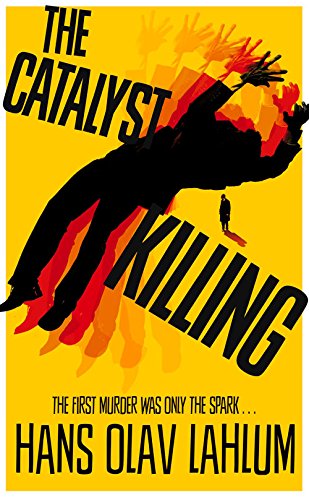
Greydoll's Criminal Reading: "The Catalyst Killing" by Hans Olav Lahlum


Back in 1970, I was a student. It was a time of revolution, rebellion and sitting-in. This didn't happen much in my own college... which was a great source of disappointment to some of our tutors who, I think, fancied themselves as being at the heart of change. But then teaching (yeah, right) at an art college in a West Country town more conformist than my own native suburbia was perhaps not the anarchist hub they might have tried for if their hearts were in it. (OK - I didn't enjoy my stay there.) I do remember that some student union meetings where quite vocal... but these never really resulted in any kind of decision because the various student factions were challenging Each Other more than The Authorities.... usually about agenda structure and points of order.

So it is that my ancient bones remember the political flavour of the late 1960s and early 1970s setting for "The Catalyst Killing" by Hans Olav Lahlum. (Translated from the Norwegian by Kari Dickson. Paperback, Pan Macmillan, 2016) and another find from my local bookshop.

The story begins one evening when Inspector Kolbjorn Kristiansen is mesmerised by the expression of fear on the face of a young woman desperately running to catch his train. The doors close on her. And later her murdered body is found on the train tracks. It is Kristiansen (known as K2) who must find her killer and who soon discovers that her boyfriend, the charismatic leader of a small, radically left-wing, political group, had disappeared two years before. Political rivalry? Or was his death linked to his research into possible current links between a group of Norwegian Nazis from the war years. And was his girlfriend's death connected to his disappearance?

Set in Norway in 1970 this murder mystery conjures the era of Mao's Little Red Book and its effect upon world politics and the fashionably radical young. Starting from the base of the student political group, K2 is presented with a tight list of possible witness interviews. We follow the progress of his interviews and crime-scene visits, punctuated by his lunches and suppers with his gifted and mysteriously accurate detection-muse, the young Patricia. Meanwhile the crimes themselves escalate.

I will own up that I am not a particular fan of Agatha Christie-style whodunits. So, when I realised how much I was in classic "whodunit land" with this book - the third in Lahlum's series featuring K2 and his young helper - I didn't think I would enjoy it. But I did.
It reads smoothly and coolly in this English translation by Kari Dickson. Instead of a boring traipse through clues, I found a calm narrative pace which surprised me with a great buildup of suspense as it ran to its conclusion. And Lahlum's writing gives us individualised characters, irony, humanity... and a slightly surreal world conjured by a combination of investigation, coincidence and the truly prodigious gifts of Patricia.

If you are a little tired of the relentless grit of much Nordic Noir .... and if the notion of 1960s Nordic retro-whodunits whets your appetite ... try this series of books by Hans Olav Lahlum.


Monday, 20 June 2016

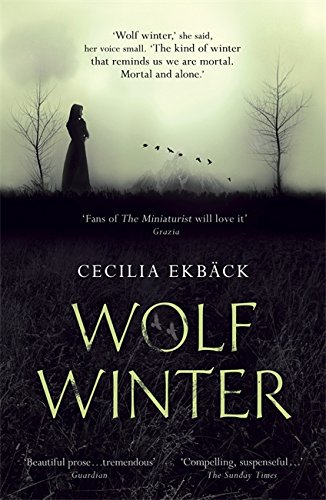
Greydoll's Criminal Reading: "Wolf Winter" by Cecilia Ekbäck

I've been catching up on my foreign crime fiction; books I missed when they first came out, or simply didn't know about.
I came across this one on the shelves of my local bookshop - The Edge Of The World Bookshop - for which I should truly thank them.

"Wolf Winter" by Cecilia Ekbäck (Paperback, 2015, Hodder). 
Imagine you are a woman come to a remote new country with two daughters, a few goats, a cow - and crops to grow and harvest. Imagine mountains where you have known only marshland and lakes; new neighbours whose ways you don't know... and a husband who has to leave for a job on the coast many miles away. It is 1717 in Northern Sweden, territory newly claimed from the native, nomadic, Sami reindeer-herders. It is a bitterly harsh winter; one the local settlers call a "wolf winter".
One day your young daughters find the body of man in a forest glade. Everyone says wolves killed him. But you don't think so. You are stubborn and curious and you want to know the answer to the mystery. But it is so cold that you don't know where to begin to feed yourself and your daughters. One day the wolves start to howl and move closer. And then the dead man begins to appear to your adolescent daughter Frederika. Welcome to the story of Finnish settler Maija and her family.

Historical Nordic Noir? I have never tried that one before. I couldn't resist this blend of crime, historical fiction and the tingle of the supernatural.This is not only a gripping and beautifully written story but a first novel, a very impressive one. Swedish-born Ekbäck currently lives in Canada. But her family roots lie in the country where she sets this novel. Her writing and prose plunged me straight into the bitter cold of the "Wolf Winter" of the title; spelling out rules for survival in this harsh land in all their necessary detail. She also gives us insight into the life of a settler community in 18th century Swedish Lapland where the Church not only records and educates individuals but makes and enforces the law. Mutual distrust between the new settlers and the Sami (Lapp) reindeer-herders gives more room for suspense as the stubborn Maija sets out to find out who killed the man in the forest - and why. Against the background of poverty and hardship during a time of perpetual war, Ekbäck has created a blend of frontier-Western and Nordic-noir; a tense whodunit which combines the dangers of the spirit world with the privations and threats of frontier life. It is peopled by characters well-realised if not always likeable and I think it is an exciting, beautifully written and impressive first novel.

Ekbäck has said that she decided against creating a series based on Maija but came to wonder about the country itself through the passage of time, the Blackasen Mountains. I shall certainly be on the look-out for her second novel - In the Month of the Midnight Sun - to be published later this year and set in the same area of the far north of Sweden, this time in 1856 and during the heat and daylight of the Northern summer.


Saturday, 6 February 2016

Criminal Travels: Poland - Miloszewski & "A Grain Of Truth"

I am just back from immersing myself in the late arrival of spring to the picturesque town of Sandomierz, Poland - which I visited courtesy of "A Grain Of Truth" by Zygmunt Miloszewski, his second crime fiction novel featuring State Prosecutor Teodor Szacki. [Bitter Lemon Press, 2012.]
I read the first "Szacki" book - "Entanglement"- late last year and posted my thoughts on that one here. I certainly enjoyed it enough to want to read this second installment and I am glad I did....

"Like a china doll floating in the mist, thought Myszynski as he gazed at the dead body lying below the synagogue. It was unnaturally, unsettlingly white, shining with lack of colour."

April 2009: Nighttime, and from a high window in the Sandomierz State Archives, housed in a converted synagogue, a soon-to-be traumatised genealogist spots the pale, naked corpse of a woman lying below. The death summons Sandomierz's new State Prosecutor, Teodor Szacki, to the scene. But what is Warsaw-man Szacki doing here, living and working in provincial Sandomierz? Answer: mid-life crisis.
Visiting the area during an investigation of the murder of a prostitute in a Warsaw brothel, Szacki's solving of the case brought him fame in Sandomierz. The weather and surrounding countryside is beautiful. He thinks, why not start a new life here? Had they a post vacant? Well, in fact, yes. And so Teodor leaves his stranded marriage, his wife and child, his big-city ennui, for a fresh start and a new life in the bosom of a beautiful, historic town.
Except it hasn't turned out that way. Teodor finds himself to be, not the big, prosecutorial fish from Warsaw, central to the town and his own life, but an outsider in a provincial city, mistrusted, isolated and lonely. He misses night-life, good wine and the bouts of bracing sparring with his old police partner Oleg Kuzniecow.

The death of the woman in Sandomierz suggests ritual slaughter. Szacki soon suspects her husband, a respected Councillor, until he himself is found dead in an even more gruesome and bizarre ritualistic setting. Does the town harbour a serial killer whose pattern of murder has its roots in the town's difficult anti-Semitic past and myths? Jewish revenge or the misleading twists of an anti-Semitic nationalist? In order to find the killer before they kill again, Szacki must investigate both the past and the present of his country and community - a community whose inhabitants know their combined history like the backs of their hands.

Beautifully translated by Antonia Lloyd-Jones, "A Grain Of Truth" is a meticulously considered and well written book that builds a convincing portrait of Teodor Szacki. It also examines Polish history and Jewish relations from all angles whilst still managing to remain a gripping crime story which had me reading into the small hours, hanging onto its pages with clenched hands, despite my internal reader struggling with an imagined pronunciation of all those Polish names; that's a nothing... a small problem compared to the crime story told. I do hope there will be a third Teodor Szacki ... or rather a third Teodor Szacki translated into English. Miloszewski has a permanent place on my bookshelf.

Saturday, 23 January 2016

Graphic Passions: "Everything Is Teeth"

And what has been my own choice of graphic novel reading recently?

"Everything Is Teeth" - written by Anglo Australian writer Evie Wyld, with art work by illustrator/model-maker Joseph Sumner.

Part memoir, the story features child Evie, partially brought up on her grandparents's sugar cane farm in Australia, and Evie's obsession with sharks.

Now, I understand the obsession factor with things that penetrate our nightmares. I'm not too good on spiders (so I don't think I fancy Australia much where there are quite a lot of spiders and they really can kill you... Bbrrr!) Come to think of it, I'm not too good with sharks either, enough for any fear I might have had of going to sea to be more about the things in the deep that might eat me... than of drowning in the watery stuff. And in particular ... those sharks... those teeth.

Joe Sumner's art work for "Everything Is Teeth" is predominantly black, white and line, except for the sharks which are rendered in naturalistic tones ... and there's the odd splash of red in the gruesome bits. The result is superficially simple and it is very easy to devour the book (shark-like) in one big gulp. But  there is a rhythm in the layout ... (I think)... where quiet double-page spreads are interspersed with comic-strip narrative, all of which result in a careful re-telling of a childhood, a family, and a phobic obsession, a world in which facts are gathered and images haunt. But the haunting image is also the fate of the shark.

You can read an "Independent" interview with the author here.

Thursday, 14 January 2016

Graphic Passions: Nobrow Catalogue

So both of us have pawed our way through Issues 1 & 2 of "Red Thorn" (as explained in the previous post) and The Old Man has two more to come before he makes his mind up whether to subscribe or not.
Me? Well Issue One was good... as it should be... but Two seems much lighter in content. We have beards, sex and monsters... but I think I like my monsters a little more ... eerie.
Also I am a graphic novel girl. I admit it. I like a book-length thing with no full page adverts what confuse a girl like I into thinking they are a continuation of the story what I have in my hand and not blurb for another title. And I really can't get into this pristine handling and storage thing what do go with flimsy little comic issues. This seems to be a bloke thing.

So ... I quite often like a small(ish) press outfit and buy my reading from a bookshop usually. For that reason I am happy to get notice of the 2016 Nobrow catalogue. Nobrow publish illustrated books, including children's books, as well as comics... and stationery and so on ... and concentrate on the work of new artists.
So here goes at sharing the catalogue....

Monday, 9 November 2015

The Dolls Criminal Travels: Northern Ireland, Libya and Italy

My dears, I have been travelling as usual. With my crime fiction reading that is.

Firstly I visited Northern Ireland with Stuart Neville's latest book, Those We Left Behind, built around DCI Serena Flanagan who appeared in his Jack Lennon book The Final Silence. (Neville has written a series featuring detective Jack Lennon whose perilous slide down the career ladder signifies the predicament us crime fans doubtless recognise - the hallmark of the independent but rackety, if not rocky, investigator who is tumbling towards a perilous edge. But do not doubt that I am a great follower of Lennon and hope he will return.) Those We Left... is a slight departure again. Although still full of suspense and chill, I think this book goes more deeply into psychological territory. It  deals with the consequences of the release from prison of nineteen year-old Ciaran Devine, after serving a seven year sentence for the murder of his foster father. A child "killer" released back into society where his older brother is waiting for him. The probation officer assigned to his case starts to have doubts about the brothers' relationship and she turns to DCI Flanagan who had gained Ciaran's trust and his confession those seven years before. It's a brilliant book in which Neville seems almost to have crossed into the realm usually the property of Scandinavian crime fiction - the dark psychological/socio-thriller. Read my review over on Euro Crime for more detail.

I also managed a long trip to Libya and Italy with Roberto Costantini's The Root Of All Evil. Make sure you have plenty of time and powers of concentration for this one. But if, like me, you have a liking for crime served up on a social, historical platter - it will be worth it. The second book in a trilogy featuring the frankly unlikeable Italian detective, Balistreri, this one runs from his youth in Tripoli as the son of an influential fascist family together with the run-up to Gaddafi's coup in 1969 and then Balistreri's investigations into a murder case in 1980s Italy. It's a case which starts to remind him of events in his Libyan youth. Detailed, painstakingly constructed, hard realities painted with neutral strokes (it is no mean feat to make readable a book which centres on an "unattractive" protagonist) this is a rewarding book. Again, you can read the full review over on Euro Crime. And you can also read a good interview with Costantini over on the Crime Thriller Fella blog.

Phew! I'd tell you of more foreign criminal adventures but I'm off to put my feet up. Be back soon.